



So why did I do a treasure hunt in Newfoundland? This is what I literally did, without going there with this in mind.
Let’s start with the beginning: Newfoundland or Terra Nova is an island in Atlantic Canada. The local people call it “The Rock”. That’s because this island is really very rocky, and actually quite big. Here is the map:

We visited it for a few years West to East, South to North, inside and outside 🙂 You can guess that I have lots of photos from there, especially that I really love this place. I can tell your that the whole area is full of treasures. A real gold mine for people who like to observe and see special things. I’m one of them, so I just hunted for treasures 🙂 All these photos are part of my Fine Art America: Newfoundland and Labrador gallery, where you can see more of them* Click on the images for a larger view!
Treasure Hunt in Newfoundland
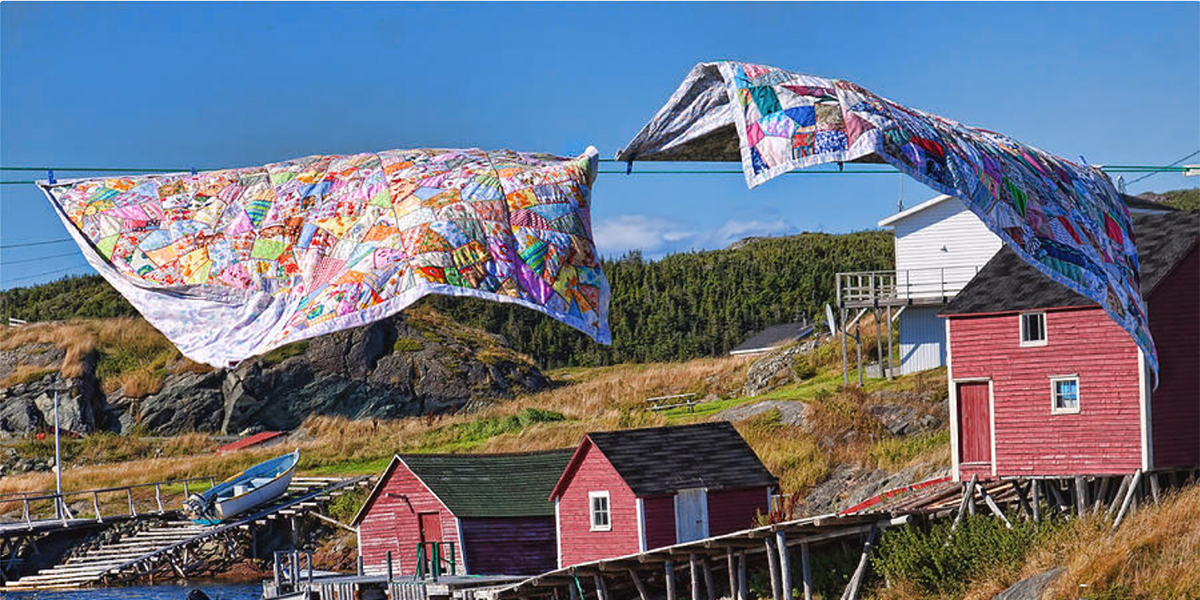
One piece of jewelry I was fortunate to find, was this scene with the quilts put out to dry in the sun 🙂 This was actually a place outside of the “Big Rock” in the ocean, called Change Islands. It’s about two small islands tied together by a small bridge.

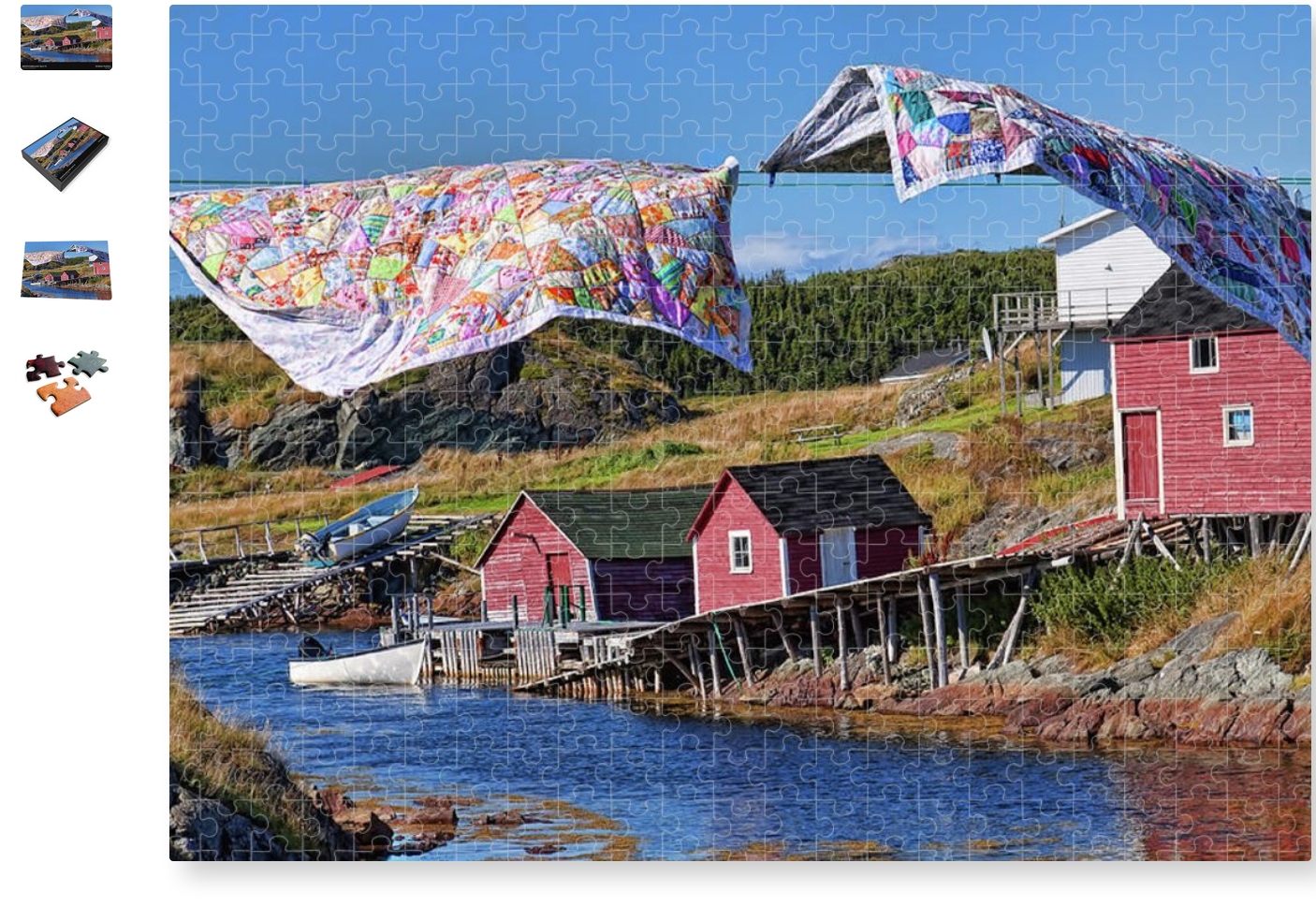
** I’m proud to tell that I sold a 20″ x 28″ (1,000 Pieces) Jigsaw Puzzle of Newfoundland quilts from my Fina Art America gallery 🙂 Thank you buyer from Sutton, QC – Canada!
I just cannot miss the opportunity to show you two more treasures from this place. One is a typical fisherman’s shack by the water. You can see all the fishing tools out there, ready to be used:

Another small island worth visiting is definitely Fogo Island – Oh, I found so many treasures there! I actually made a post about a Quiet Morning on Fogo Island Newfoundland
Brimstone Head is a unique geographical rock formation, which juts out into the Atlantic Ocean. It is known throughout the world as one of the “Earth’s Four Corners“, and has been visited by thousands of people.

The main economy in Fogo is of course fishing. This below, is a harbor with many fishing boats, some private some industrial. I got inspired and made it as a digital painting:

One of the greatest treasures on Fogo is the Bleak House museum. I’ll probably have to make a separate post with this, as I have several photos from that place. One is the 9th Century rural kitchen * I also made this original photo as a painting in the digital media (I just love playing with my photos)

The Main Island
The main island doesn’t lack places for treasure hunting either. I think that these below are the most significant:
Gross Morne National Park
Gross Morne National Park, Newfoundland, Canada, on which I made a book after vising it: Gros Morne National park book.

Gros Morne is a very old mountain. Eroded by time it looks more like a hill of only 807 m (2,648 ft) high. It is however the second highest peak on Newfoundland:

The National Park covers a very large area with many fishing villages along the water and here is a scenery from Sally’s Cove:

Avalon Peninsula
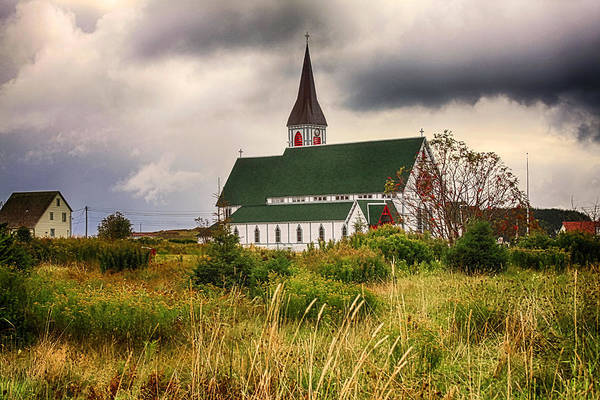
Trinity Bay and Village is a beautiful and very touristic place. One piece of jewelry from there is this historic church completely remodeled.
And look what other treasure I found here: an old fashion blacksmith shop with a working blacksmith inside! 🙂


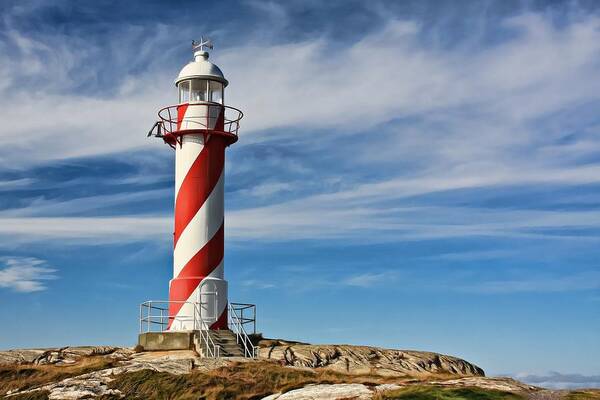
Red and White striped lighthouse at Heart’s Content on Avalon Peninsula, Newfoundland, Atlantic Canada:
Cape Bonavista
The windiest place in Newfoundland, Cape Bonavista is amazingly beautiful:

Look at the fence they built along the shore to protect it from water:

Salvage Village
This is a very picturesque fishing village on the East Coast, full of treasures.

There I could see how people conserve fish for the winter by salting and drying it.


St. John’s Newfoundland
St. John’s Newfoundland is a separate chapter in my treasure hunting
Last but not least is St. John’s, the capital of Newfoundland, the oldest and most easterly city in North America. I found an incredible amount of photographic opportunities there if we only talk about their bright colored houses. Welcome to St. John’s, Newfoundland, Canada!

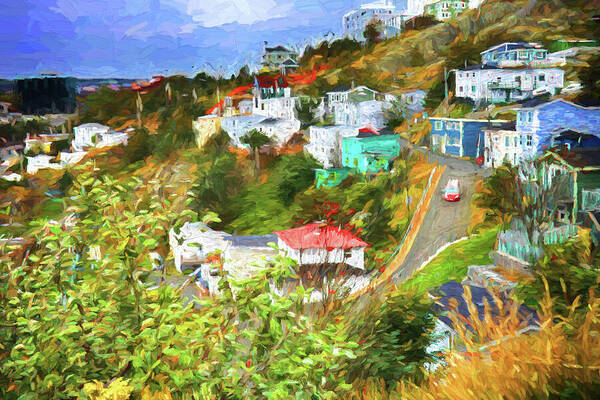
Here is a view from one of the backstreets of this wonderful city, made as a painting in the digital media:

The Harbor
But besides the colorful houses, when visiting St. Johns, you cannot miss the harbor:

Here are some more photos of it, with boats and ships coming and going all the day long:


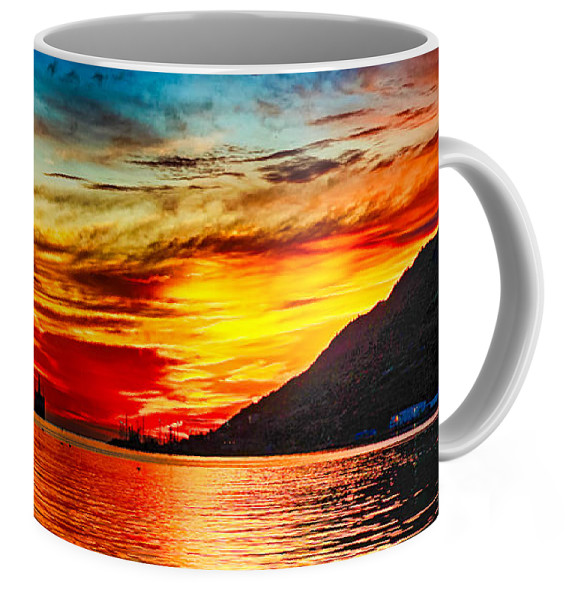
Oh, if I don’t stop now I will never stop with photos from this harbor and city… One more to go: my husband took this photograph of the St. John’s harbor looking out toward the Atlantic ocean, at sunrise.

* BTW: I sold a large coffee mug with his picture 🙂 Thank you a buyer from Montreal!

Well, almost finished… 🙂
The Battery Hill
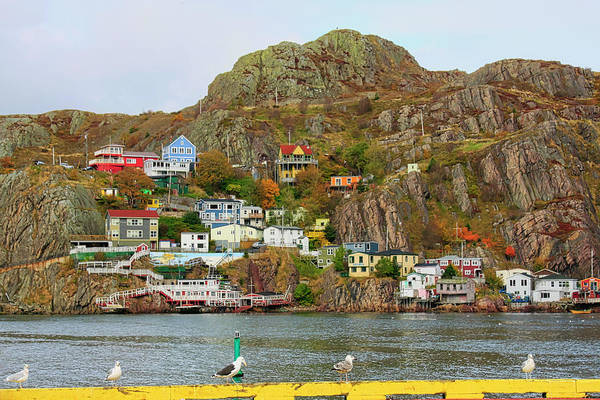
Another huge treasure box I found in St. Johns, is the old part of the city. It’s incredible to see all these colorful houses and streets going up and down on Battery Hill
This is a digital painting I made with one of those streets:
But the cherry on the cake is yet to come. This is maybe one of greatest treasures I found in this city. Take a look at these hand painted crafted mailboxes:
I found so many of them that I decided to put them together in a poster:

This is finally the end of my small collection from the Treasure Hunt in Newfoundland. I hope you like it 🙂 For more art prints, please visit my Newfoundland gallery on Fine Art America!
Lens-Artists Challenge #85 – Treasure Hunt |

If you want to jump for joy, Cancun, Mexico with it’s blue Caribbean water is a good choice to go.
In the summer it may be a little hot there, although on the water it’s quite comfortable. But in the summer everybody can find great places to jump in the water. In the cold months of winter though, being able to do some water sports is different…

The Mexican Jet ski driver with the two tourist young girls were having a lot of fun there! Same these two guys I watched from the beach through the telephoto… Oh, the water is so beautifully blue and clear there! How can’t you jump for joy? 🙂

I’m not sure how happy were those dolphins at Xcaret park near Cancun. They seamed to enjoy playing with that Mexican girl though… maybe they were jumping for joy (?)

There are several ways of transportation in Guatemala. Ours was a rental car we got in Cancun, Mexico. Welcome to the Caribbean! 🙂

I have to make a parenthesis here about this:
This was in the year 2010. Later, in 2018 we tried to do the same – we had already booked a place via airbnb, but we couldn’t make it there… At the Guatemalan border, the new regulations said that you had to own the car in order to cross. That was such an anti-touristic restriction! We had to cancel the place we booked and lost the money… If you want to do the same, make sure to check the latest regulations at the Guatemalan border!

Anyway, in 2010 we used the Mexican rental car and here is another very useful information:
Whether you go to Guatemala or to any other country it is a good idea to pay a little extra for the insurance. In our case that was a decision that saved us quite a bit of money. We had our rental car broken in and the cheep radio stolen. For a half of our trip we had to put plastic sheets in the rear windows to protect us from the draft… Hey, the fun of traveling 🙂
I didn’t keep photos of the car after the incident, but it happened right on this street below.

This is a nice and very touristic place by the way, with many historic authentic Guatemalan style hotels. But, you have to park on the street.

The rental car however, allowed us to go on many country roads and observe the Guatemalan life style. We always like to take the back roads and rarely drive on highways, unless it’s absolutely necessary 🙂 * Click on the pictures for a larger view!

Ways of transportation in Guatemala
Let’s continue the story and see the style of Guatemala transportation. One of the first things I saw on the back roads of Guatemala was this smiling rider transporting some merchandise with his two horses 🙂

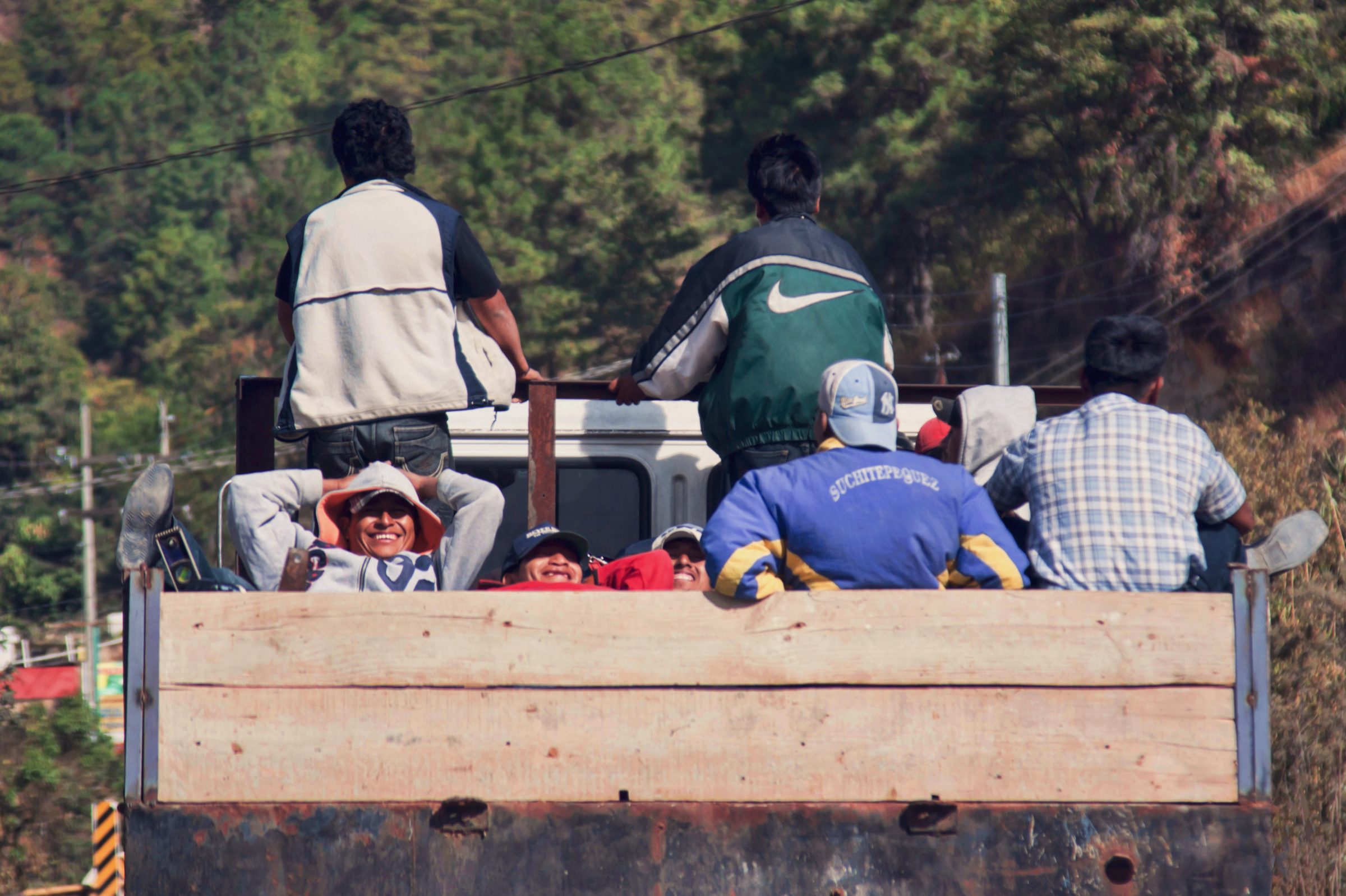
But, like in other Latin American countries, public transportation is very common. They usually overload those old worn “camionetas” with people and everything else…


… And of course any time is good for taking a nap 🙂

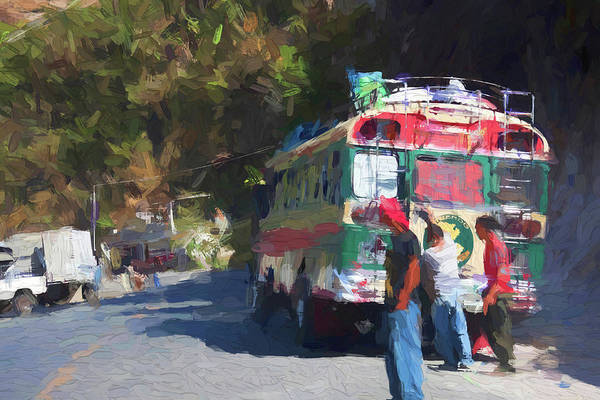
In larger communities, Guatemalans use bigger buses, and even trucks. Like all the other Latin Americans they love to decorate them. These photos below are from Santiago Guatemala, a city on Lake Atitlan. I made some of them as paintings in digital media and uploaded them to my Fine Art America Gallery. the ones with captions are available as art prints:

They often use old US school buses and call them “Chicken Buses”
In small towns especially in touristic towns, the tuc-tuc’s are very popular. Here is one in Panajachel:

Water transportation in Guatemala
The Lake Atilan for instance with a surface area of 130.1 km2 (50.2 sq mi) is one of the most touristic places in Guatemala. The only way to visit anything however, is by water – there are very few roads. The only easily accessible towns by land in this area are Panajachel and Santiago Atitlan.

Most of the N. Americans go first to Panjachel, which is a very touristic town on the lake, with the view of the volcanoes. You can spend a whole vacation there and visit the beautiful area around.
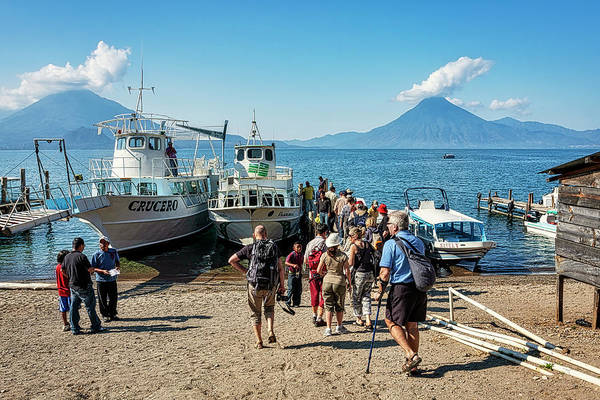
I also made the picture above as a watercolor painting in the digital media:
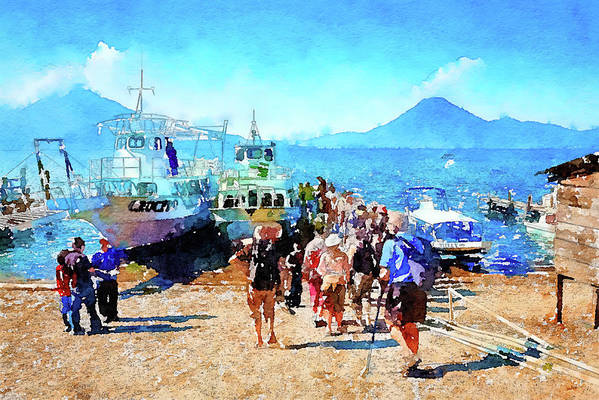
The view of the water and great variety of boats on it is just fantastic. I couldn’t stop taking photos… Just take a look at a few of them posted here and tell me what you think 🙂 * You can see more in my Lake Atitlan gallery


This is what it looks like when you arrive on the other side:

I have seen and photographed some more interesting boat transportation instances in Guatemala, on lakes and rivers. They will most probably be the subject of posts to come, as it is literally not possible to insert them all here 🙂

But in the countryside of Guatemala, people transport things their way and here are some instances I found worth photographing:
A woman carrying a pot of water for her family:

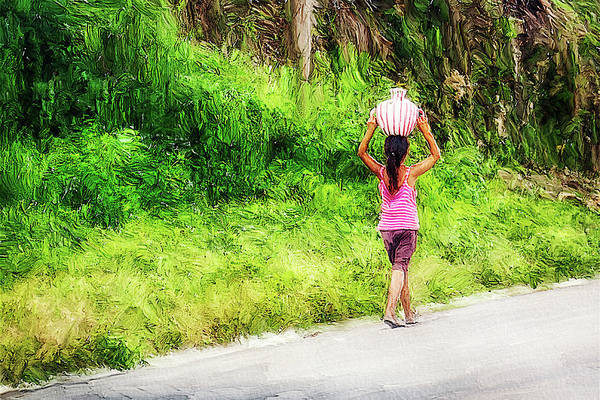
The same was doing this girl walking on the road by the side of the jungle:
Another woman was bringing cut wood (that she probably cut herself), home. That was on the side of the highway, where other fortunate people were driving trucks, buses and cars… * Yes, this is a woman!

I hope you enjoyed seeing my Guatemalan transportation photos 🙂
Posted to “Tuesday Photo Challenge – Transport” on WP