







Yellowstone travel is one of the main attractions of the North part of USA. Get the best of it with simple to follow tips.
Yellowstone travel tips
Yellowstone National Park is special and while visiting it, you really need to know how to do it.
This will give you security, comfort and peace of mind.
1. Get your US National Parks pass
If you are over the age of 60, first of all make sure you get your $10 lifetime pass for the US National Parks.
– You have to show it at the entrance. * It only takes one pass per car.
– Other recreational lands passes are available here: http://www.nps.gov/findapark/passes.htm
– Otherwise the entrance fees into the Yellowstone National Park (payable at the entrance ) are:
- $25 for a noncommercial private vehicle,
- $20 for a motorcycle
- $12 for each visitor 16 an older entering on foot, bike, ski, etc.
* These fees give you a 7 day permit for both Yellowstone and Grand Teton National Parks
2. Stay informed and follow the Yellowstone Travel Rules
– When you enter any park you get free brochures, maps and useful related information. Don’t refuse them, and especially in the case of Yellowstone, read them carefully before you commit to the visit – this may save you the trip and even more…
* Yellowstone National Park can be dangerous and you can face some fierce conditions if you don’t follow the rules
– It is very important to check the prohibited activities within Yellowstone; again, this can save your life.
Read about how to behave in the proximity of the wildlife

Beware that accidents have happened when people tried to approach wild animals, or left food (trash or scented items) easy to be reach by them.
– For example, you must stay at least 100 yards (about 100m) away from bears and wolves and 25 yards (about 25m) from all other animals.
– Do not feed any wildlife, including birds, squirrels and coyotes.
– If you see a bear while driving, find the next pullout, park safely, and watch him going away from inside your vehicle.
Are you hiking? Look for all available information on this
People watching the geysers and hot springs at Yellowstone National Park
– Read the park newspaper for important hiking safety information
– Stay on designated trails and boardwalks. * Grounds are fragile and the water hot, as well as the vapors which some can be toxic – there were deadly accidents there)

– Keep your kids close at hand
– Control you pets if you are in an area where they are allowed – otherwise don’t take them.
– Check your cell phone provider for the covered areas
3. Yellowstone National Park Lodging

– If you want to visit the park from mid June to mid September, you really have to book ahead your lodging, because it’s very, very busy!
* In mid June when we visited the park, there was no availability of any kind – even the campgrounds were completely full.
So really plan ahead and book your lodging early enough.
The lodging facilities inside the park are:
- Roosevelt Lodge Cabins
- Lake Yellowstone Hotel and Cabins –
- Lake Lodge Cabins
- Mammoth Hot Springs Hotel and Cabins
- Old Faithful Snow Lodge and Cabins
- Old Faithful Inn

My husband and I visited the Craters of the Moon Idaho National Park this year in June. While traveling from Tween Falls, Idaho, we follow the highway 20. Suddenly we noticed that the nice green fields and hills along the Snake river changed without notice into a sea of dark/black ground and rocks!

Dark ground at the Craters of the Moon, as seen from the road
I have never seen something like this before and intrigued, I looked at my husband. He smiled. He knew about the existence of this place but admitted that has never seen it before. So the surprise was some how for both of us 🙂 As we were not in a hurry we decided to visit it and I’m glad we did.
Craters Of The Moon Idaho National Park

Craters of the Moon sign on highway 20
There is a mix of old and new petrified lava here. At the Visitor Center which is not far from the sign, we learned the oldest known eruption was 15,000 years ago and it’s the part that’s covered with vegetation. The most recent eruption occurred 2,000 years ago – that area is the darkest one. Geologists say that future events may likely happen here.
The Visitor Center
The Visitor Center at the Craters of the Moon Idaho National Park is situated 18 miles Southwest of Arco and 20 miles North from Twin Falls, on US 20/26/93.
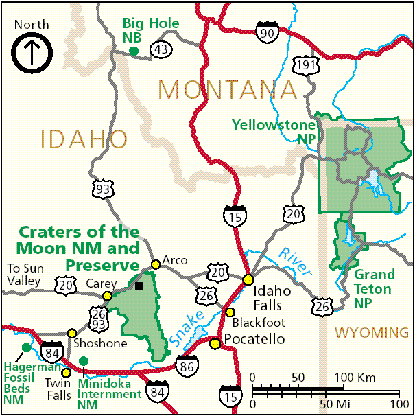
Craters of the Moon Directions

Visitor Center of the Craters of the Moon National Monument
At the Visitor Center you can have a lot of information and details related to this area, including movies, exhibitions and a bookstore, and it’s open year-round.
Logging and Facilities at Craters Of The Moon Idaho National Park
For who wants to camp here, there are campground facilities with water, restrooms and picnic areas (no hookups), with no reservations. Several other camping areas are available in the park, but they have water-less restrooms. Here you can find more info about the Fees, Passes, Hours of Operation and more.
Tip: As a senior US citizen, my husband has a pass for all the national Parks in US, so we didn’t have to pay any entrance fee.
Crater of the Moon Pictures

Volcanic Rocks thrown up by the force of the eruption

Huge boulder of dark petrified lava in the middle of the field
There is not too much vegetation there (I’m wondering why…), other than some sagebrush, moss and a few colorful flowers, but the sightseeing is beautiful

Flowers at the Craters of the Moon

Sightseeing at the Craters of the Moon
We explored the zone for a couple of hours, but the whole area is a 750,000 acres of lava formed landscape. You may need more than one day to visit it all. Warning: There are many miles of underdeveloped rugged dirt and roads; If you have a a high 4-wheel-drive vehicle you are good.
The lava formations are quite impressive:

People climbing a lava/ash formatted hill

Lava formatted hill covered by some small vegetation

Hills of lava formed after the eruptions

Fields covered by lava at the Craters of the Moon
We went up to one of the craters. The deep hole into the volcano looks scary, but you don’t have to worry! The fence that surrounds it makes it safe, so no danger to approach the edge.

People looking into the volcano crater hole

The upper edges of the crater
More lava formations at the Craters of the Moon:

Pieces of petrified lava as they had frowned from the crater

Solidified lava on the walls of the crater

Low Tide at Peggy’s Cove – Click on the photos for a larger view:

The low tide at Peggy’s Cove offers a unique approach to this rural heritage place of Nova Scotia,. Here you can see some colors and textures not available in other places.
… The yellow golden seaweed is so amazing, almost like from another planet.
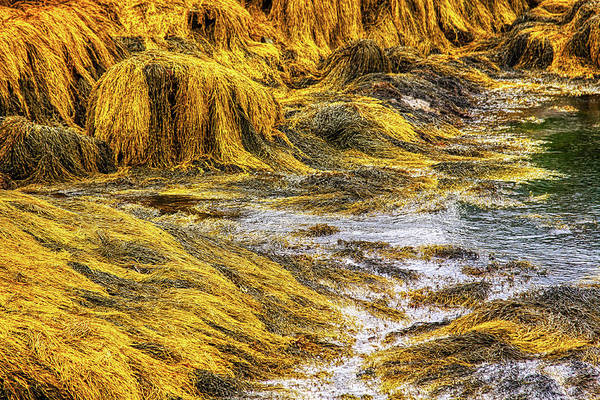

Fisherman’s shacks, rocks and and seaweed reflected in the blue water offer an unique view. These, are things you can only find in the Maritime, Canada.


The small coves on the rocky shore offer stunning views too, full of contrasts and beauty.
At low tide, you can notice the high pillars covered with seaweed and shells – It’s time for the seagulls to have some snacks 


I’m not sure how many times a day the low tide happens, but when at dusk it looks different…

Some of these photos can be seen in my Canada and Nova Scotia gallery, at Fine Art America
Peggy’s Cove is one of my favorite travel destinations in Nova Scotia – No wonder my husband and I lived in the Peggy’s Cove area for 3 years, and came back for another whole summer
This is a poster I created, showing various pictures of the village, including the famous lighthouse. Click on it for all the options:

I just updated this post with new added images.